Staż naukowy w Humanities Institute, University College Dublin Dr hab. Izabeli Morskiej Prof. UG
Dr hab. Izabela Morska Prof. UG w dniach 15 kwietnia – 15 czerwca 2026 odbyła staż naukowy w Humanities Institute, University College Dublin. W jego trakcie prowadziła badania nad kulturowymi i politycznymi wymiarami zamachu na prezydenta Gdańska Pawła Adamowicza, ze szczególnym uwzględnieniem jego intelektualnego partnerstwa z amerykańskim filozofem Benjaminem Barberem oraz ich wspólnej refleksji nad demokracją miejską i obywatelskością. Analizowała także język współczesnych ekstremizmów oraz manosfery, badając, jak dyskursy te kształtują narracje o przemocy politycznej i kryzysie demokracji. Podczas stażu wygłosiła referat After Adamowicz: Assassination, Refuge, and the Fragile Ethics of Solidarity oraz uczestniczyła w konferencji Bad Feelings: Sadness + Gender in Contemporary Culture. Jej poszukiwania mają znaczenie również w obrębie badań nad kulturą anglojęzyczną, ukazując, w jaki sposób idee wypracowane w anglojęzycznej humanistyce funkcjonują w kontekście środkowoeuropejskim i jak wpływają na sposoby opowiadania o współczesnych formach przemocy i radykalizacji.
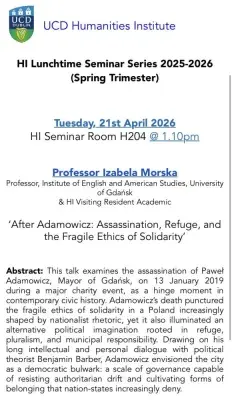
Between 15 April and 15 June 2026, professor Izabela Morska completed a research residency at the Humanities Institute, University College Dublin. During this period, she conducted research on the cultural and political dimensions of the attack on Gdańsk mayor Paweł Adamowicz, with particular attention to his intellectual partnership with American political philosopher Benjamin Barber and their shared reflections on urban democracy and civic ethics. She also examined the language of contemporary extremisms and the manosphere, analysing how these discourses shape narratives of political violence and democratic fragility. During the residency, she delivered the talk After Adamowicz: Assassination, Refuge, and the Fragile Ethics of Solidarity and took part in the conference Bad Feelings: Sadness + Gender in Contemporary Culture. This research also speaks to work in English‑language cultural studies, illuminating how key concepts from contemporary democratic thought travel across contexts and inform discussions of political violence.